Teaching Casino Chance Through Film and Classroom Models
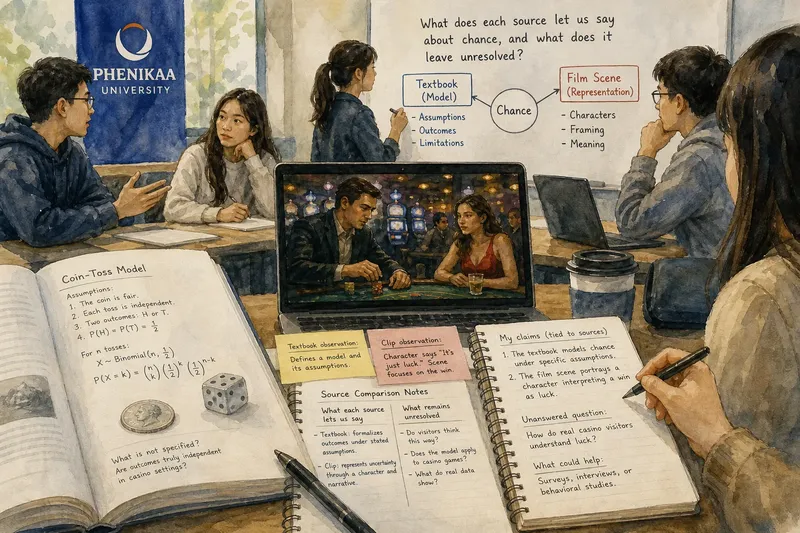
Teach casino chance through film and classroom models with a focused lesson plan that helps students analyze storytelling and reason clearly about defined outcomes.
The most common mistake in teaching casino chance is to treat a cinematic win as evidence of skill or control. Students may leave remembering the winner’s confidence, not the choices that made the scene persuasive. A film analysis can instead focus on how casino culture is represented, while a separate classroom model clarifies what can—and cannot—be concluded about a defined event.
Separate the questions
A casino scene is a crafted account. Camera position, sound, editing, dialogue, and the characters chosen for the frame guide the audience’s attention. Students can ask how those choices turn an uncertain outcome into a story about nerve, expertise, luck, or fate.
A classroom model has a different job: it sets out a question and the assumptions used to discuss it. A coin toss or card exercise can make those boundaries visible, but neither recreates casino play, its stakes, or the way a scene presents winning and losing.
Write the lesson aim before choosing either format. If students are analyzing how a character seems in control, use a scene. If they are defining possible outcomes under stated assumptions, use a model. If both aims belong in the lesson, mark the transition so students do not mistake a storytelling device for an explanation.
Read the casino scene
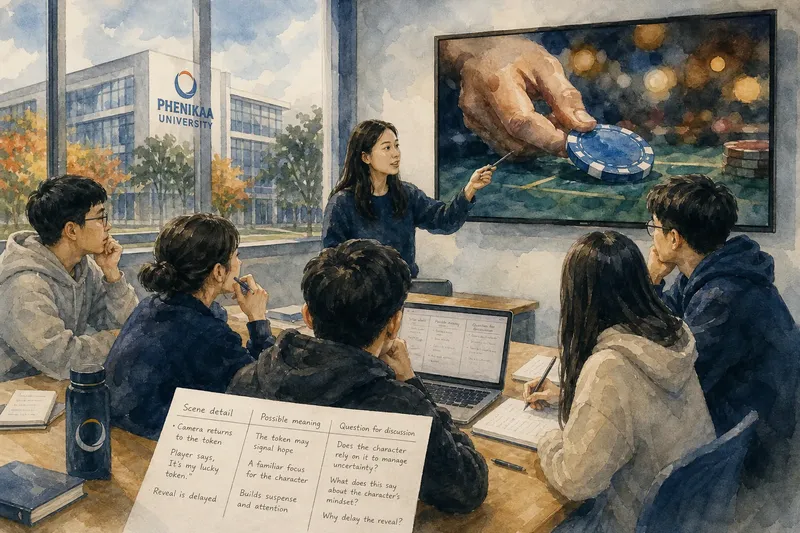
Ask students to support each interpretation with a specific detail. A close-up may make one person’s reaction dominate; a pause may stretch anticipation; music may make a result feel triumphant or ominous. Those details show how the scene shapes attention, not what caused the outcome.
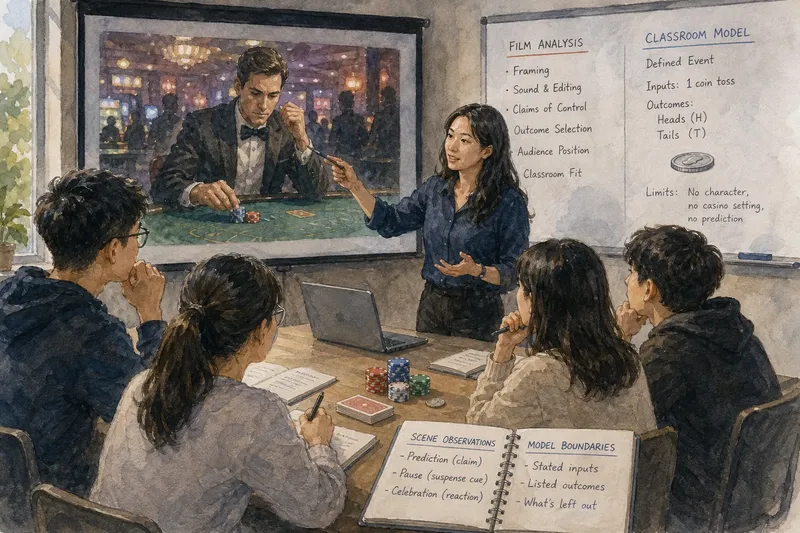
Use this viewing guide to connect an observation with a decision:
- Framing: If the shot follows one winner, note who and what remain outside the frame; then describe the scene as one person’s perspective rather than a complete account.
- Sound and editing: If music, silence, or a cut heightens suspense, name the cue; then compare the audience’s likely reaction with what the dialogue alone establishes.
- Claims of control: If a character credits intuition or skill, record that as the character’s claim; then ask whether the scene supplies evidence beyond the character’s own words.
- Outcome selection: If the story shows a win but skips other attempts or outcomes, note the omission; then avoid using the selected moment as a full explanation of casino chance.
- Audience position: If the scene invites viewers to admire or fear a character, identify the cues doing that work; then separate emotional effect from a claim about how an event works.
- Classroom fit: If the excerpt may distract or cause discomfort, check university guidance and choose a suitable alternative; otherwise, set discussion boundaries before viewing.
Name the model limits
Before a classroom exercise, state its inputs, its possible outcomes, and what it leaves out. A coin toss can define a small event for discussion; it cannot stand in for casino decisions, money, social pressure, or the presentation of a game. A card exercise can make a stated set easier to inspect, but it does not explain a film character’s confidence.
Keep the model’s purpose narrow. Ask students to name the event under consideration, list the outcomes included, and identify information the exercise does not contain. If the class cannot agree on those boundaries, clarify them before drawing a conclusion.
This distinction also helps prevent a common classroom leap: moving from a simple model to a broad claim about gambling culture. A model supports discussion only within its stated limits. Questions about representation belong with the scene and its choices; questions about outcomes belong with the specified model.
Choose a teaching format?
When should a class start with film?
Start with film when the aim is to examine mood, character, editing, or the portrayal of control. Choose a focused excerpt so students can point to specific choices instead of retelling the plot.
When is a classroom model more useful?
Use a model when students need to define an event and state which outcomes they are considering. Ask them to name the assumptions and omissions before interpreting the exercise.
Can both formats fit one lesson?
Yes, if each format answers a different question. A scene can prompt discussion of a portrayal, and a model can clarify a separately defined event; make the change in purpose explicit.
How should a class discuss a character’s confidence?
Describe confidence as part of the character’s portrayal, then ask what the scene actually establishes about the result. Do not treat a dramatic cue or confident line as evidence that confidence caused an outcome.
Work through a lesson
Say a Phenikaa seminar uses an invented casino scene in which a character predicts a win, pauses, and then celebrates. The instructor’s aim is to analyze how the scene represents chance, not to teach gambling strategy.
The class starts with three observed details from the invented scene: one prediction, one pause, and one celebration. Students identify the prediction as a claim, the pause as a suspense cue, and the celebration as a reaction selected for the audience. Their decision is to describe the scene as inviting an impression of confidence, not as explaining why the result occurred.
The instructor then gives the class a separate, invented model with one coin toss as its input and heads and tails as its listed outcomes. Students apply the rule that conclusions must stay within those stated inputs and outcomes. The observable result is that the model contains no character, prediction, or casino setting, so the class decides it cannot answer whether confidence influenced the scene’s win. The tradeoff is deliberate: the model makes its narrow question clear, while the film supplies material for analyzing how a broader story is presented.
Plan the class discussion
Before class, write one sentence naming the intended learning. Select a scene if students should explain how specific choices shape an audience’s interpretation; select a model if they should state outcomes and assumptions. If both goals matter, write a transition question such as, “What does the scene ask us to feel, and what does the model let us say?”
After discussion, ask students to identify which evidence supports each kind of statement: details from the scene for claims about representation, and the model’s stated inputs and assumptions for claims about its defined event. This keeps casino chance at Phenikaa University open to thoughtful discussion without asking a film or a simplified exercise to answer questions it was not built to address.
For the next class, keep the distinction visible in prompts and board notes: label an observation as a storytelling choice or a model assumption. That small habit helps students decide what kind of evidence a new claim needs before they accept it.