How Phenikaa University Can Teach Chance Through Casino Culture
Teach casino culture at Phenikaa University with a source comparison that separates mathematical chance from its media portrayal and keeps class claims precise.
The common mistake in a Phenikaa University seminar on casino culture is to treat a vivid film scene as evidence of how casinos or their visitors behave. That shortcut can leave students debating stereotypes instead of examining how chance is represented and what a source can actually support.
Start with sources
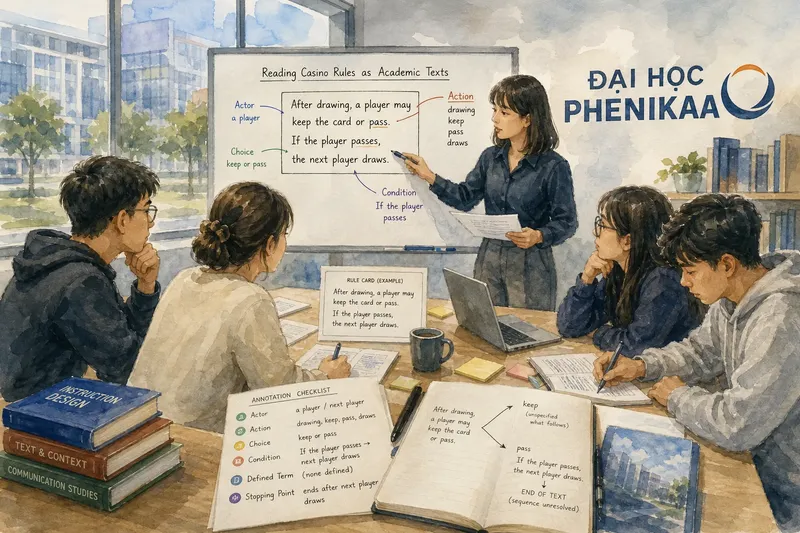
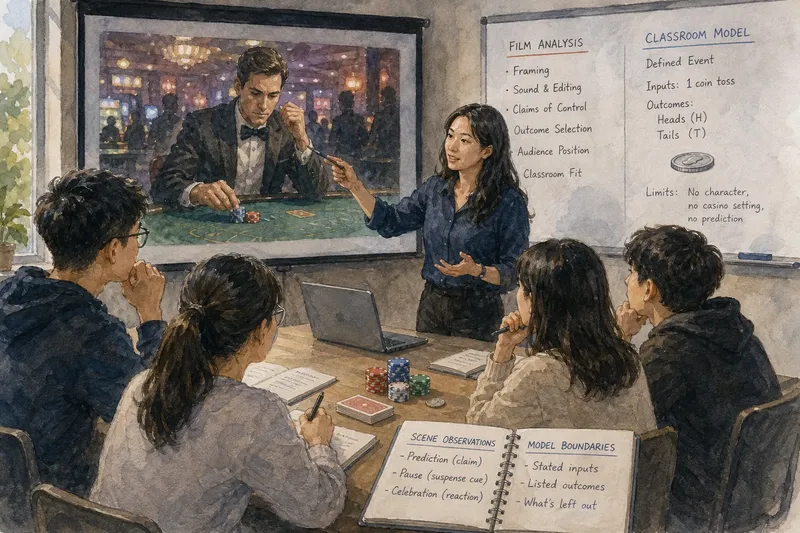
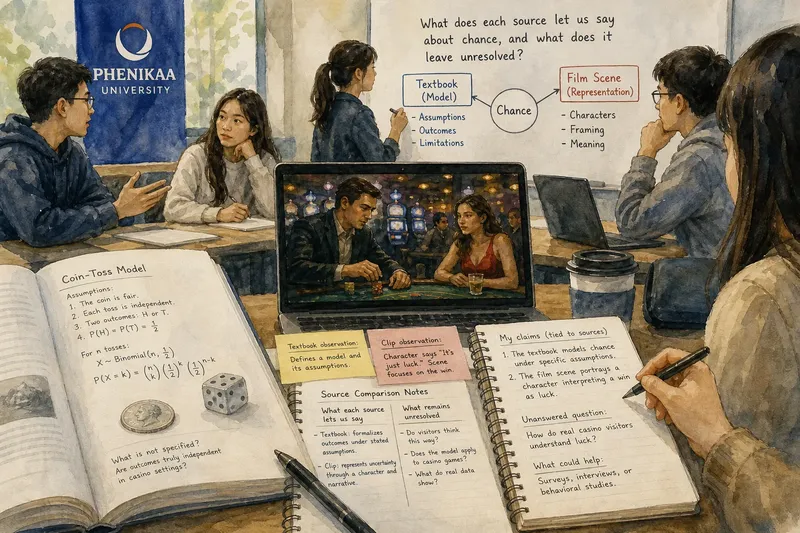
Build the class around a contrast in how sources produce meaning, rather than around a general survey of gambling. Pair a passage from a probability textbook with a course-approved film scene, advertisement, or news item. The textbook may define a model and its assumptions; the other material may use images, dialogue, or editing to frame uncertainty.
Write one question on the board: What does each source let us say about chance, and what does it leave unresolved? Ask students to name the source type before interpreting it. A mathematical model, a fictional scene, and a news report are not interchangeable forms of evidence.
Separate claim types
Have students distinguish a claim about a source from a claim about the world. “The scene shows a character treating a win as luck” describes a representation. “Casino visitors generally think this way” makes a broader claim that the scene alone cannot establish.
This distinction gives the discussion a useful boundary. Students can analyze what a source depicts, whose perspective it centers, and what its framing invites viewers to feel. If they want to make claims beyond the source, ask what additional material would be needed and whether that material is suitable for the question.
Compare the materials
Give students a copy of the textbook passage and access to the selected clip, plus paper or a shared document for notes. Ask them to record a concrete observation from each source, then choose a cautious interpretation. The following checks connect each observation to a decision:
- Textbook assumptions: Check whether the passage states the model it uses; if it does, discuss conclusions within those assumptions, and if it does not, ask what information is missing before treating it as a probability explanation.
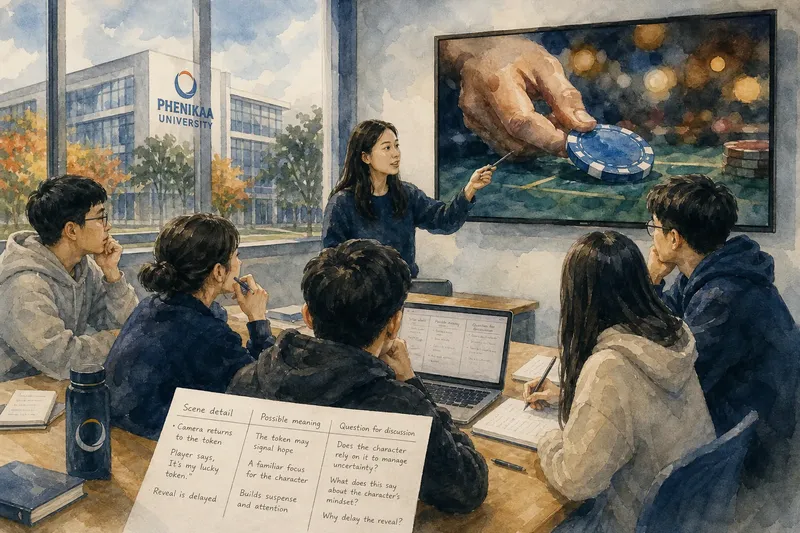
- Clip details: Check which characters, actions, and dialogue appear; if a claim stays close to those details, analyze the scene’s framing, and if it goes beyond them, ask for another source.
- Meaning of “luck”: Check whether the word refers to randomness, personal fortune, or another idea; if the meaning is clear, use that definition, and if it is ambiguous, compare interpretations before drawing a conclusion.
- Classroom model: Check whether a coin toss or dice roll is presented as a limited model; if it is, keep the discussion within its stated assumptions, and if it is presented as a claim about casino settings, request relevant evidence.
- Social representation: Check whether the material depicts an individual or supports a broader claim about a group; if it depicts only an individual, describe that portrayal, and if students propose a generalization, ask what suitable evidence could support it.
- Personal concern: Check whether a student is seeking support rather than offering an academic interpretation; if support is wanted, respond respectfully and point to appropriate campus or community resources, and if not, continue with the agreed course question.
Try a source comparison
Imagine a Phenikaa seminar begins with a hypothetical textbook passage that names a coin-toss model and a hypothetical film clip containing one casino scene. Students first underline the model’s stated assumptions and note any missing ones. They then record two visible details from the clip, such as a character’s words and the scene’s focus, without treating either detail as a claim about real visitors. Next, each student writes one sentence about what the textbook models and one about how the clip represents uncertainty. If the class concludes that the passage formalizes outcomes while the clip gives uncertainty a character-centered meaning, both claims remain tied to their sources. The decision is to compare those distinct contributions, not to use either source as a complete account of casino culture.
Questions about casino culture?
What does casino culture mean in class?
It means studying ideas and representations associated with casinos through a defined course question. The instructor should make clear whether the class is analyzing a model, a media source, or another kind of material.
Can a coin toss represent casino chance?
A coin toss can help students discuss a simple model and its assumptions. It should not be treated as a description of casino practices or as advice about gambling.
Can a film scene support an academic claim?
It can support claims about what that scene depicts and how it frames its subject. Broader claims about people or institutions require suitable additional sources.
How should instructors respond to personal disclosures?
Listen without turning a student’s experience into evidence about a wider group. If the student wants help, point to appropriate campus or community support, and consult qualified professionals when a concern needs more than general guidance.
Set a clear task
Ask students to identify the source type, describe one detail, and state what that detail allows them to claim. Then have them name one unanswered question and the kind of material that could help address it. This gives discussion a concrete endpoint without asking a single source or student to represent an entire subject.
For a Phenikaa University class, casino culture becomes a focused way to examine how chance is modeled and represented. Keeping observations separate from broader claims helps students make a stronger comparison—and recognize when the evidence calls for a narrower conclusion.